Wednesday, August 30, 2006

Lowest on Record and That's Not the Drop in Temperature

According to the The American Library Association, 405 challenges had been reported in 2005. It is the lowest total of challenges on record.

The ALA has been keeping track of book challenges since the early 1980s. Banned Book Week was established as a way of raising the issue while celebrating free expression. This year, Sept. 23-30 marks the 25th annual "Banned Book Week."

Judith Krug, director of the ALA's Office for Intellectual Freedom, cited possible factors for the decline:

1. Librarians are better prepared to organize community support on behalf of a book
2. Online content could be taking the focus away from print

The ALA defines challenges as "formal, written complaints filed with a library or school requesting that materials be removed because of content or appropriateness." For every challenge listed, about four to five go unreported, according to the library association.

Topping the list of the most "challenged" book of 2005 was "It's Perfectly Normal: Changing Bodies, Growing Up, Sex, and Sexual Health," by Robie Harris. J.D. Salinger's "The Catcher in the Rye," Judy Blume's "Forever" and Robert Cormier's "The Chocolate War," continue to be among the top ten. They are usually challenged because of "sexual content" and inappropriate language.

I like the remarks of one reporter.
"The Catcher in the Rye"? Can't folks find a new book to ban? It's 55 years old, for goodness sake. Holden Caulfield is on social security.

Tuesday, August 29, 2006

It Was A Dark and Stormy Night....

Check out this link to American Book Review. They have listed what they have identified as the Top 100 Best First Lines from Novels. I was amazed to see how many of them have been banned or challenged at one time or another. See if you can identify all of the challenged books.

Thursday, August 24, 2006

Protecting the Children...from....?

The Miami-Dade School Board voted to continue their fight to remove a controversial children's book on Cuba from their libraries.

It has become a politically-charged issue and the timing puts it two week prior to the Sept. 5 elections.

While a judge rejected the Board's reason (that it presents a distorted view of life in Cuba, showing smiling children and omitting problems that life under a dictator present) for banning Vamos a Cuba and 23 other titles.

"The discussion around the issue of parental rights and the sovereign powers of elected officials and wise use of taxpayer dollars is an issue worth fighting all the way to the Supreme Court," said board member Frank Bolaños, who opposes the book. "This is a matter of principle -- it warrants us investing as much time and resources as we need to be able to protect these things we believe in."

"Do we have a right to protect our children?" continued Bolaños. "I think we have the right and responsibility to do that."

The board voted to remove the 32-page books in June 2006, with the reason that they oversimplify the foreign countries they portray. The books are aimed at a target audience of 5 to 7-year-olds. Since only the Cuba book was ever discussed in detail, the American Civil Liberties Union's lawsuit was launched on the premise that the ban was based on politics.

The district has already spent more than $123,000 to fight the case and has already budgeted another $127,000 for the appeal.

Friday, August 18, 2006

Wednesday, August 16, 2006

Is it a Book or a Scarf?


In a post from August 12, I lamented the banning of books and other reading material on planes flying out of the UK. Well, BoingBoing has come up with one solution for you in the form of a scarf.

Tuesday, August 15, 2006

Scary Stories


According to an article in the Courier-Journal, a complaint against the series 'Scary Stories' by Alvin Schwartz has been rejected in Greater Clark County, Indiana. The school board voted unanimously to keep these stories in the elementary school libraries.

Dorsey, a local grandparent, wanted all volumes in the series banned because they depict cannibalism, murder, witchcraft and ghosts, and include a story about somebody being skinned. Her granddaughter did not read the book but saw the pictures and was having nightmares because of them, she said.

Doug Chinn, principal at Utica Elementary, said that the request to ban the book was rejected because the books were considered appropriate for older elementary students. The committee suggested that parents should review what their children are reading.

According to the American Library Association, the "Scary Stories" series topped the list of the 100 most frequently challenged books from 1990 to 2000. It continues to face challenges each year.

Monday, August 14, 2006

Author Deborah Ellis Honoured

Author Deborah Ellis whose book "Three Wishes: Palestinian and Israeli Children Speak" has been challenged/banned in Toronto and York schools will receive the Elementary Teachers' Federation of Ontario Children's Literature Award tomorrow at the ETFO annual meeting. According to a press release, this award which is being offered for the first time this year, "recognizes children's literature that is in keeping with ETFO's positions on social justice and equity."

Read more about Deborah Ellis and Three Wishes in previous posts from March 7, March 21, April 26, April 28, and June 1.

Congratulations to Deborah Ellis, a Canadian author who is not afraid to tackle difficult topics and present them to the next generation who may find the solutions to deep-seated conflicts. A laurel wreath to the Elementary Teachers' Federation for recognizing her gifts.

Saturday, August 12, 2006

Books are Dangerous

Well, airport security has confirmed what librarians all over the world have known. Books have been labeled as dangerous. Due to information about what could be a terrorist plot, a number of security measures have been put in place at airports. Newpapers around the globe such as New York Times, Baltimore Sun, Seattle Times, and others report that books or other reading materials including newspapers have been banned from carry-on luggage.

I'm not sure what danger they pose, other than perhaps dangerous ideas, which is the usual reason for banning books.

Friday, August 11, 2006

Your Comments

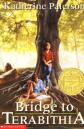
Bridge to Terabithia

"I think this book was banned or challenged because it deals with the loss of a child. People may feel that for a child who is reading the book, it is too heavy of a situation for a child's book."


Bridge to Terabithia has been dealt with in a previous post and another previous post. Look there for reasons why the book has been banned.

For more about Katherine Paterson, visit her official web site.

Thursday, August 10, 2006

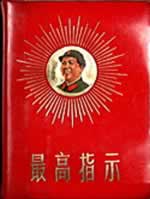
Wild Swans and Chairman Mao


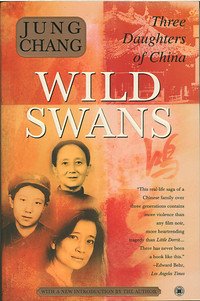
I recently finished reading Wild Swans by Jung Chang. This memoir has been banned in China since 1994 and apparently even pirated versions omit references to Mao.

Chang looks back over three generations of women in her family and the upheaval in their lives as they endured the Japanese occupation; the Civil War; Mao's rise to power; and the Cultural Revolution. It is a fascinating look at history and its effect on one family. From her grandmother, whose bound feet were an outward sign of her lack of freedom as a concubine to a powerful man, to Chang herself, who worked towards Mao's goals with a passion, the book describes the turmoil the Chinese have endured. It also is a tribute to their strength of character. It sold more than 10 million copies and was translated into 30 languages.

Chang has just published a controversial biography of Mao which is banned in China, but she hopes the first Chinese translation will break through. The book took 12 years to complete.

Ironically, the book 1984 made her wonder, "in a naive way, if Orwell had ever been in China. I was reading about the society I'd been living in. How did he know?"

Wednesday, August 09, 2006

You Have to Find out Somehow

According to an article by Reuters, a clinic in China posted an erotic book online despite China's tight rein on anything it considers pornographic or even erotic.

Suprisingly, the sexual health clinic defended its posting. The posting was of excerpts of an ancient, erotic novel called "Secret Lust of Spring Palace" that contains explicit sexual content.

The health clinic defended its actions, saying it was intended for treatment, not for personal gratification. Dr. Zong, a spokesperson for the clinic, said the hospital specializes in tackling sexual problems, both physical and mental, that lead to infertility. He believes this kind of literature can be used to help educate and cited the example of a couple who had complained about infertility. It turned out they did not know how to have sex and that the wife was still a virgin when they came to the hospital. Thus the need for explicit material.

Despite pornographic literature being banned, sexually explicit content is widely available online and on street corners in China.

Thursday, July 27, 2006

Here is a Question

Should a book be banned for what it doesn't say?

The Miami Herald doesn't think so.

Munsch, Munsch, Munsch

Robert Munsch is a Canadian children's author whose books have faced many challenges.

Thomas' Snowsuit, by Munsch, was challenged in Lloydminister, Alberta/Sask. because the teacher felt that the story undermined the authority of all school principals. The principal agreed and removed the book from the school library. Another school district followed suit. The cross-dressing of child and principal has raised objections.

Munsch had a librarian call to report that three of his books had received complaints in her school district and she was considering removing them. What she believed was an "organized movement," turned out to be two families in two different schools who had complained about the same books.

Authors also face pre-publishing censorship. Annick Press wanted Munsch to soften up The Paper Bag Princess. Elizabeth, the princess punches Prince Ronald in the nose. Munsch did not give in to pressure from Annick who believed there would be problems with censors. Following its publication, some parents complained that Munsch's The Paper Bag Princess was anti-family because the princess refuses to marry the prince. Other adults have not liked that Elizabeth calls Ronald a bum.

An article entitled Good libraries don't: The Censorship of Canadian Picture Books, tells of a number of challenges to picture books including those of Robert Munsch. In 1988, Munsch reported that, "I have to go pee!"—the repeated line in his book I Have to Go was replaced with, "I have to go to the bathroom."

Munsch said in a 1988 interview:
Kids love talking about peeing and farting, but they do not like stories where the mother says, "Go to hell!" to the father. That's a major taboo violation, and kids do not want an adult doing that. But to have an adult saying "bum" or "pee" that's great. "Underwear" is good too!

Munsch's Giant; or Waiting for the Thursday Boat was challenged in Middlesex and Welland Counties, Ontario for depicting violence towards God. Giant was returned to Middlesex school libraries with the restriction that, "because of the book's religious implications, it won't be in the primary curriculum and teachers won't be permitted to read it to children." Munsch stated that he thought people might be upset over the book on religious grounds but that their letters indicated that they were more upset over the violence in the book. According to a University of Saskatchewan Challenged List, objections to Giant were made on the basis of religion; morality; God portrayed as a little girl; angry Giant says he wants to kill God. Sources: (Roberts, 1996); (CBC4Kids, 2001).

Good Families Don't was the next book Munsch was working on when Giant was being challenged. Good families don't what? Fart. "God knows what the reaction to that is going to be!" thought Munsch. I am unable to find documentation on challenges, so let me know if you have read them. I don't doubt they are out there.

According to a University of Saskatchewan Challenged List, Murmel, Murmel, Murmel faced a challenge. The objection cited is "Human reproduction." Source: (Roberts, 1996)

I am unable to find documentation on Love you Forever but it seems that people either find the idea of the son rocking his elderly mother on his lap touching or weird and creepy. One review on Amazon from an ordinary reader says this,
I was horrified when I read I Love You Forever - another children's book by Mr. Munsch that results in a mother using a ladder to break into the house of her adult son to rock him in his sleep. Because my daughter liked the book, I taped all the wierd [sic] pages together to save the better parts of the story.

Please let me know if you know of a challenge of this book. My feeling is that adults are reading far too much into this touching story. This parent "save[d] the better parts of the story" or so she would like to think.

Tuesday, July 25, 2006

A leaf from George Orwell's "1984?"

That is Joe Crankshaw's assessment of the Miami-Dade School Board's decision to remove "Vamos a Cuba" ("A Visit to Cuba") from their school district's libraries (along with 24 other titles depicting life in other countries).

Crankshaw identifies the anti-Castro political agenda that has cause the removal of this book and warns of the long-term consequences of this kind of thinking.
Now the battle against Castro is being waged on the field of ideas, and the methods being used mirror the straitjacket control of thought in Communist countries. In other words, the champions of democracy and free thought don't want it for any view but their own. The risk is they could become dictators just like Castro.

Yesterday, according to a Reuters report, a federal court judge the ban lifted. The American Civil Liberties Union filed a suit against the Miami-Dade School Board on June 21, 2006. The ACLU says this marks the first major battle over book censorship by a US public school system since 1982.
Lawyers for the ACLU do not dispute critics’ claims that the book, with its pictures of smiling children, fails to depict many aspects of life in Cuba. But they argued at a hearing in Judge Gold’s courtroom last Friday that the book and its content were appropriate for its target audience of children aged 5 to 7.

U.S. District Judge Alan S. Gold ordered the book returned to libraries until a final ruling is made. According to Gold,
The only books in contention in this case are library books, books that are by their nature optional rather than required reading. By totally banning the Cuba books and the rest of the series, the school board is in fact prohibiting even the voluntary consideration of the themes contained in the books by students at their leisure. This goes to the heart of the First Amendment issue.

The ACLU argued that the book ban violated the First Amendment of the US Constitution, which guarantees freedom of speech, and defied a US law prohibiting censorship.

Saturday, July 22, 2006

Banned Book Lists


Lists of recently challenged and banned books are available through The Illinois Library Association. These pdf files need to be read with Adobe Acrobat which is a free download. The ILA has used information from the American Library Association to compile these lists.

Friday, July 21, 2006

Your Comments


The Terrorist
"People do not like to think about kids getting hurt but people need to come to reality . These things do happen."

The book was enjoyed and is recommended to friends.

Wednesday, July 19, 2006

Your Comments


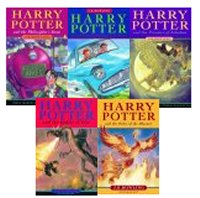
Harry Potter Series
"I think it was challenged because of the witchcraft and wizardry. Some people believe that putting the idea of witchcraft in a child's head leads them to not look at situations and life realistically."

The books were enjoyed and are recommended to friends.

Tuesday, July 18, 2006

History of Censorship

Read an interesting article on the history of censorship published by The Atlantic. The article explores a num ber of publications from the past and their authors' attitudes towards censorship and its role in society.

Thursday, July 13, 2006

Walking the Fine Line

According to the LA Daily News, the Wilsona School District board has put new library book guidelines in place. This has come about following the decision of trustees to remove 23 books from a list recommended for a school library.

Books cannot depict drinking alcohol, smoking, drugs, sex, including "negative sexuality," implied or explicit nudity, cursing, violent crime or weapons, gambling, foul humor and "dark content."

"In selected instances, an occasional inappropriate word may be deleted with hite-out rather than rejecting the entire book," the policy said.

The policy states that library materials must be age-appropriate, taking into consideration the different maturity levels of district students who range in age from 5 to 14.

One criteria is that books must be "socially appropriate" -- "fair balanced socially appropriate portrayal of people with regard to race, creed, color, national origin, sex and disability." "Materials must not promote nor discourage any particular religious doctrine."

Along the line of religion, this is an interesting tidbit: According to a number of sources including a US web site devoted to the separation of church and state,
The Wilsona School District board in Lake Los Angeles, California has voted 3-2 to permit invocations at the start of its monthly meetings. The Antelope Valley Press newspaper says that the religious ritual is to be 'a prayer of entreaty and call for divine presence that would be nonsectarian.' Even so, the invocation at the first meeting governed by the new rule was delivered by Pastor Jeff Loewen of Living Springs Foursquare Church and 'invoked Jesus Christ, cited Jehovah and asked the Lord to look down upon the people's wickedness and sought forgiveness for banning prayer in public schools.'

All books must comply with a section of state education law, titled the "Hate Violence Prevention Act," which states,
Each teacher shall endeavor to impress upon the minds of the pupils the principles of morality, truth, justice, patriotism, and a true comprehension of the rights, duties, and dignity of American citizenship, and the meaning of equality and human dignity, including the promotion of harmonious relations, kindness toward domestic pets and the humane treatment of living creatures, to teach them to avoid idleness, profanity, and falsehood, and to instruct them in manners and morals and the principles of a free government.

A book containing an unsavory hero was banned for exposing the children to a bad role model. "The Eye of the Warlock," was deemed inappropriate because of the warlock character. However, the school committee member who read it appeared to enjoy it: "A very fractured version of Hansel and Gretel. The hero, Rudi, saves the day. I greatly enjoyed it." Read what the author has to say at Oz and Ends.

Board President Sharon Toyne explained,
I think basically because for the last eight or nine years, we've been pushing character education in our school district. There are so many issues changing in the society we are living in. With this ever-changing society, we have to just stick back to the traditional thing of what kids are supposed to be learning.
I wonder exactly what the kids are supposed to be learning. There are mixed messages in the application of this policy.

Some books were banned despite the committee admitting they were unfamiliar with them.

Rejected titles included three bilingual Clifford the Big Red Dog books, "Harry Potter and the Half-Blood Prince," "Welcome to the USA California," "Disney's Christmas Storybook," and two books from the Artemis Fowl series. Trustee Marlene Olivarez, a retired teacher, said the latest "Harry Potter" installment was rejected because it is fantasy. "We want books to be things that children would be able to relate to in real life," she said. "We want these books to support the curriculum, build character, give kids enjoyment, and encourage reading." Is the board living in a fantasy world where people do not smoke, drink, have sex, or swear? If the children can't read realistic books and cannot read fantasy, it seems to me that the reading list will be quite limited.

Board member Sharon Toyne is afraid of what could happen if a child's imagination is aroused.
The book's [Harry Potter series] wizards and magic all falls in the line of witchcraft. . . . In our district we are trying to promote character with programs like Character Counts, and I don't see how the book promotes that. I think [the books] could arouse a child's imagination and curiosity of the unknown, of the dark side.

Some of the rejected books may be brought back for approval, according to the trustees.

There is a fine line between protecting children and keeping them sheltered in a safe, little world (but one without fantasy).

Another Book on Cuba Faces Challenge


The politics involved in banning books on Cuba in Florida are muddying the waters. Why are these books being challenged. Is is because the books truly are misleading or is it because someone wants to be elected to the school board and they are creating their platform by challenging books on Cuba?

Read Matthew I. Pinzur's take on the whole affair. He has been the Miami Herald's lead education writer since 2002, covering Miami-Dade schools as well as state and national education policy. He follows the school system's complex politics as well as education in the classroom.

"I'm thinking of going to law school for the sole reason that the market for suing the Miami-Dade School Board over book-banning issues appears to be a growth industry."

"...we can delve into the some of the more arcane political background."

In a 32-page children's non-fiction book on the US, would we expect a full exploration of poverty in the US, of strained race relations, of drive-by shootings, of health care problems, of the trampling of civil rights by the Patriot Act, etc? Every country has its problems no matter what system it follows. The US and Canada are no different from Cuba in that respect and it is ridiculous to expect a children's book to explore these issues.

Some of the complaints about "Vamos a Cuba" revolve around the photo of children smiling on the cover. Despite living conditions, people all over the world smile -- even those people living under repressive regimes or in dire poverty.

The ACLU released this statement:

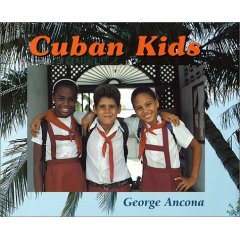
“This is a prime example of the slippery slope and open season on libraries and authors that will be inevitable if censorship of books in our public school library system is institutionalized. Two months ago it was Vamos a Cuba, now it’s Cuban Kids – next week could be any and every other book on the library shelves which would leave the children of Miami with empty libraries.
We are already involved in litigation over the removal of Vamos a Cuba in Miami-Dade Public Schools. If the judge rules in this case, as was already decided in Board of Education v. Pico in 1982, that removal of a book from a school library based on its content is unconstitutional – the nature of this recent complaint will be a moot point since it is also covered under the same criteria.”

Tuesday, July 11, 2006

Your Comments on The Giver


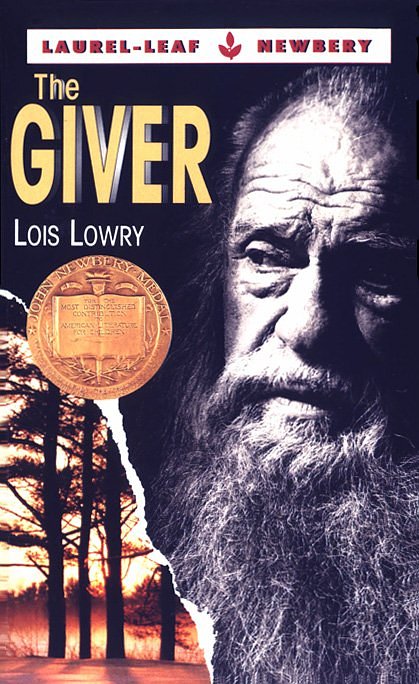
The Giver
I am unable to understand why this book was challenged or banned. It has an excellent plot and has morals that are taught, that every kid should read about.

Wally Hastings' Children's Literature Page offers the following information:

According to the American Library Association, The Giver has ranked as one of the most commonly challenged books in public and school libraries.

* The Giver was challenged in 1995 by a parent in Franklin County, Kansas, on the grounds that it is "concerned with murder, suicide, and the degradation of motherhood and adolescence." The book was removed from elementary libraries but remained available for classroom use at teachers' discretion.

* In Wrenshall, Minnesota, a school board member and two parents objected to the inclusion of The Giver on a list of books to be purchased for a high school, on the grounds of offensive language and objectionable themes. The school board approved the book but stipulated that parents would receive a list of books to be studied during the year.

* In Johnson County, Missouri, complainants charged that The Giver desensitized children to euthanasia and asked that the book "not be read in class to children under high school age." The book remains in the high school section of the K-12 library.

* A parent in Sidney, New York, publicly objected to the novel's "usage of mind control, selective breeding, and the elimination of the old and young alike when they are weak, feeble and of no more use..." but did not file a formal complaint.

* A review committee in Brecksville, Ohio, recommended the removal of The Giver from an elementary library. Objections referred to infanticide and adult themes in the novel. The book was removed.

* Somewhere in Oklahoma (no city given), a parent objected to the novel's use of terms such as "clairvoyance," "transcendent," and "guided imagery," because these are "all occult New Age practices the Bible tells us to avoid." The review committee voted unanimously to retain the book but prohibited it from being read aloud in fourth grade. The committee also recommended that immature readers be discouraged from trying it, and that the librarian should make fewer copies available.

* Medford, Oregon: In the absence of a formal review policy, language arts teachers decided not to use the book in seventh grade classrooms after a parent complained of graphic descriptions of euthanasia.

* In 1994, The Giver was temporarily banned from classes by the Bonita Unified School District in LaVerne and San Dimas, California, after four parents complained that violent and sexual passages were inappropriate for children.

* The book was restricted to students with parental permission at the Columbia Falls, Mont. school system in 1995 because of its treatment of themes of infanticide and euthanasia.

Friday, July 07, 2006

Racial Slur or Historic Reality?


According to an article in The Examiner, author Ken Mochizuki faces controversy over his use of the word "Jap," in .“Baseball Saved Us.”

This award-winning children’s book about the World War II Japanese-American internment could be removed from the second-grade reading list. While its detractors are not against the book and the values taught in the story, they do not think the use of the racial slur is necessary.

In my opinion, this is an example of what happens when people are unwilling to place the story within its context. The racial slur would have been used and it is not helpful to cover up that fact.

The issue will be addressed at an upcoming New Milford school board committee meeting.

Thursday, July 06, 2006

A Bit of Satire - States to Ban Mind-Destroying "Book" Scourge

"Hardknoxville, Tennesseesaw - Police and teachers haven't noticed large numbers of kids getting hooked on the allegedly dangerous hallucinogenic material known in street parlance as "book," and federal drug agents say that few people are currently using it. But that hasn't dissuaded Tennesseesawen lawmakers and political opportunists in five other states from seeking to outlaw the substance."

Read all about it here.

Saturday, July 01, 2006

Listmania of Challenged Books

Amazon offers lists of books on various topics. "Jennie," a children's librarian and banned book reader offers four lists of recently challenged books through Amazon. She cites the location where the book was challenged and other information. Unfortunately, most of the information is about challenges in the US, although she does refer to the recent challenge to "Three Wishes" by Deborah Ellis.

Friday, June 30, 2006

Long Beach Reads One Book


If you have never read Fahrenheit 451 and want to hear an excerpt from the first chapter, check out the e-book put together for a community reading event by Long Beach Public Library Foundation and The Long Beach Public Library. There are extensive links at the library site including discussion questions and other resources.

Thursday, June 29, 2006

Your Comments


The Diary of Anne Frank
I do not know why the book was challenged or banned. I feel that it is an excellent learning tool for kids and adults of all ages. The book was enjoyed and recommended to friends.

Wednesday, June 28, 2006

Stay in School

"Vamos a Cuba" and its English-language version, "A Visit to Cuba" continue to be in the news. In a previous post, I explained that a Miami school board had voted to remove the books and others in the series for lack of detail. What I read into it is that some Cuban-Americans are upset that the political reality has not been explained in this children's reference book. You can find the full text of this book to judge for yourself. What the board needs to keep in mind is that this and the books on other countries by the same publisher that have been removed cannot be expected to fully depict life in those countries in books for children with 32 pages.

What about adding materials with alternate viewpoints in order to flesh out the collection as opposed to banning these books? That is the question asked by the ACLU and the Miami-Dade County Student Government Association when filing a lawsuit against the school board. For now, the books will remain in the schools.

Footnote: Cuban librarians are weighing in on this one. According to an Associated Press story, Cuban librarians are critical of the Miami-Dade County school board's attempt to ban a children's book because of its positive depiction of life in Cuba.

"It's outrageous the Miami school libraries would prohibit the presence of the book "Vamos a Cuba" because it shows the truth about how our children live," librarian Margarita Bellas Vilarino told the communist youth newspaper Juventud Rebelde.

Tuesday, June 27, 2006

Sticks and Stones May Break My Bones...

A recent article in The Guardian explains that a slang dictionary has been banned in North Carolina. One school district has bowed under pressure from some conservative Christian groups that are using the internet to influence school boards in their fight to have the book banned across the US. A web site called Called to Action mounts "public encouragement campaigns" that line up with its members' philosophy.

Jonathon Green, editor of the Cassell Dictionary of Slang believes that North Carolina is the only place where the book cannot be used in schools.

Four other books were challenged including, "The Chocolate War" (one of the most challenged books) by Robert Cormier, "Junie B Jones and Some Sneaky, Peaky Spying" (WHY?) by Barbara Park, "Reluctantly Alice" (no surprise here) by Phyllis Reynolds and "In the Night Kitchen by Maurice Sendak" (There is a naked cartoon boy in this one.)

As for Mr. Green, he is flattered.

Your Comments


The Outsiders
I believe "The Outsiders" was banned or challenged because it had a lot of fighting in it. The book was enjoyed and is recommended to friends.

Thursday, June 22, 2006

It's All in the Way you Look at It


"Uncle Tom's Cabin" was published in 1852 by Harriet Beecher Stowe, very soon after the Fugitive Slave Act was passed in the US. According to About, President Abraham Lincoln greeted Stowe by saying: "So, this is the little lady who wrote the big book that made this great war." Stowe's literary work has been called America's "first protest novel," by abolitionist, poet and writer Langston Hughes.

Ironically, "Uncle Tom's Cabin" was banned in the South in the 1800s but also comes under attack today. While in the 1800s, it was banned for its sympathic view towards black slaves, today "Uncle Tom's Cabin" has come to represent a negative, even racist image.

It is so important to understand the context from which authors like Stowe have written. Otherwise, it is too easy to dismiss books like "Uncle Tom's Cabin," "Tom Sawyer," "Adventures of Huckleberry Finn," "To Kill a Mockingbird," and "Their Eyes were Watching God." If the language assaults our modern day ears and we are disturbed by the harsh depiction of being black in a white world, I'm sure these authors will feel that they have done their jobs.

Monday, June 19, 2006

What Young Adult Books are Being Challenged Lately?

Check out the site by Kelly Milner Halls, a freelance writer and children's author. She has been assistant to Chris Crutcher whose books for young adults have come under attack many times. Halls' website lists YA books and links to related articles over the past two years.

Saturday, June 17, 2006

Your Comments

Catcher in the Rye


I found this mildly amusing cartoon at
The London Times.

Holden Caufield (main character) is very negative and he tends to swear a lot throughout the book. As well, there is a chapter with a prostitute and there is foul language at the end of the novel.

This reader enjoyed the book and recommends it to friends.

Thursday, June 15, 2006

Comprehensive List of Common Reasons for Banning or Challenging Books

Edward B. Jenkinson is the author of “Protecting Holden Caulfied and His Friends from the Censors”(English Journal 74:1 (1985): 26-33). In this journal article, Jenkinson surveys the textbook censorship picture over the past decades.

Jenkinson lists twenty-five common reasons that books may be challenged or banned. They are listed in no particular order.

1) Children questioning authority of parents and other authority figures
2) Profanity
3) Characters speaking in non-Standard English
4) African American literature and dialect
5) Portrayals of women (Some groups object to portrayals of women in traditional roles and others to portrayals of women in non-traditional roles.)
6) Mythology
7) Non-Christian culture
8) Supernatural, occult, witchcraft, Halloween
9) Ethnic Studies
10) Violence
11) Sexual Acts, sexually explicit language
12) Invasions of privacy, asking readers to examine personal backgrounds
13) Abundance of cartoons
14) Works by or about homosexuals
15) Works that do not champion the work ethic
16) Books that do not promote patriotism
17) Negative statements about parents, authority, and U.S. traditions
18) Science fiction and fantasy
19) Works by “questionable” authors such as Langston Hughes, Malcolm X, and Ogden Nash
20) “Trash”: such as Catcher in the Rye, Go Ask Alice, Flowers for Algernon
21) Nontraditional family units
22) Books promoting self-awareness and self-understanding
23) Books promoting critical thinking
24) Works unfavorable to African-Americans
25) Use of masculine pronouns to refer to male and female (he, his, etc.)

Watching with Interest


I have been watching the various discussions on "Vamos a Cuba," or "A Visit to Cuba," which is now banned in Miami. This children's book about traveling to Cuba has been deemed inappropriate for school libraries because of its inaccuracies and omissions. This book has been banned for its weakness in providing good information about life in Cuba under Communist rule.

When I first heard about the controversy, my first thought was that a parent was upset that life in Communist Cuba was being depicted with too rosy a brush. However, Wednesday's ruling, in which school board members voted 6-3 to remove this book, also covers books about travel to Vietnam, Greece and China, among other countries. Critics said the series does not offer enough details about the countries it includes.

As I have not read this or any of the other books in the series, I cannot make a good judgment call, but it seems to me that it is rare that a book is banned over weak content. Perhaps rather than ban a book at a later date, those who choose books for school libraries need to be a little more stringent in their choices.

Wednesday, June 14, 2006

Your Comments

Go Ask Alice
I think that it was challenged or banned because of its content. People may feel that if kids were to read the book then they may feel influenced to try the drugs to see if they take the same effect.

The reader enjoyed the book and would recommend it to a friend.

Thursday, June 08, 2006

Read An Excerpt

Read an excerpt of a challenged or banned book here.
Adventures of Tom Sawyer (Chapter 1)
Alice's Adventures in Wonderland (Chapter 1)
Bridge to Terebithia (Chapter One)
Killing Mr. Griffin (How Does it Feel?)
The Face on the Milk Carton (Chapter One)

Find these excerpts, reviews, interviews with authors and more literary stuff for young adults here.

yabookscentral

Check in for Your Comments

For everyone registered in the Fahrenheit 451: Banned Book Club at the Pelham Public Library, thank you for your participation. Congratulations to Sarah Roode, Katelyn Pritty, and Melissa Grossi, winners in the draw. Our thanks to Book Depot, St. Catharines for donations of challenged books and to Jumbo Video (Fonthill Location) for a free video rental for each winner. Watch for the program to start up again in February 2007 but check back here for posts of your comments from the response cards.

Monday, June 05, 2006

More Fahrenheit 451 Resources

I just found a wonderful site --
The Big Read, through The National Endowment for the Arts. It has very reliable information as well as discussion questions for four banned or challenged books, including Fahrenheit 451, The Great Gatsby, Their Eyes were Watching God, and To Kill a Mockingbird.

An Exercise for You

In Fahrenheit 451, a community of people tried to save books by hiding them and by becoming a book through memorizing it.

Imagine that you have joined the wandering group of book lovers. Think of five books you think would be worth saving from the firemen. These should be works you think would be of value to future civilizations, either for their ideas, their stories, their characters, their point of view. Out of the five books, pick one you would memorize and "become."

Saturday, June 03, 2006

Response to Challenges in Schools

The National Council of Teachers of English has a response form for teachers to give to parents who are challenging the use of a particular book in the classroom. I think many of its questions are valid ones to ask whenever a book is being restricted.

1. Have you been able to discuss this work with the
teacher or librarian who ordered it or who used it?
2. What do you understand to be the general purpose
for using this work?
a. Provide support for a unit in the curriculum?
b. Provide a learning experience for the reader in
one kind of literature?
c. Other
d. Did the general purpose for the use of the work,
as described by the teacher or librarian, seem a suit-
able one to you? If not, please explain.
4. What do you think is the general purpose of the author
in this book?
5. In what ways do you think a work of this nature is
not suitable for the use the teacher or librarian wishes
to carry out?
6. Have you been able to learn what is the students'
response to this work?
7. What response did the students make?
8. Have you been able to learn from your school library
what book reviewers or other students of literature have
written about this work?
9. Would you like the teacher or librarian to give you a
written summary of what book reviewers and other students
have written about this book or film?
10. Do you have negative reviews of the book?
11. Where were they published?
12. Would you be willing to provide summaries of the
reviews you have collected?
13. What would you like your library/school to do about
this work?
____ Do not assign/lend it to my child.
____ Return it to the staff selection committee/department
for reevaluation.
____ Other--Please explain
14. In its place, what work would you recommend that
would convey as valuable a picture and perspective of
the subject treated?

Shocking Shakespeare


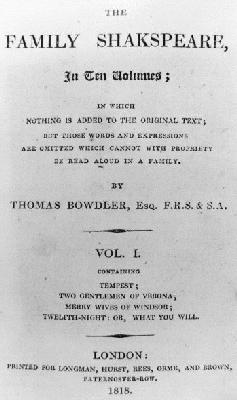
According to "You Can't Read This," the great playwright, William Shakespeare, was censored by well-meaning people who wanted to make his plays accessible to families. "The Family Shak[e]speare" includes this disclaimer,
"...in which nothing is added to the original text, but those words and expressions are omitted which cannot with propriety be read aloud in a family."
According to Dr. Bowdler, who may or may not have been the editor of this book, he had
"omitted many speeches in which SHAK[E]SPEARE has been tempted to purchase laughter at the price of decency."

This book and one in a similar vein--"Tales from Shakespear[e]," appeared in bookstores in 1807. By 1900, there were almost fifty versions of Shakespeare's works that had been sanitized.

It may have been that it was not Mr. Bowdler who rewrote Shakespeare but Mrs. Bowdler who would not want people to know that a respectable woman had read and understood the original works with their lewd puns and dirty jokes.

Thursday, June 01, 2006

Deborah Ellis Was Here


As I have mentioned in previous posts of April 26 and 28, 2006 and March 7, 2006, Three Wishes: Palestinian and Israeli Children Speak has faced controversy in Canada. While first published in 2004, it did not receive wide-spread attention until it had been placed on the Silver Birch List.

The Pelham Public Library invited Deborah Ellis to speak to the controversy and she spoke to an audience of over 50 people. She chose two stories to read -- one from a Palestinian child, one from an Israeli child. Both stories illustrated the universality of being a child -- the "ordinariness" of life -- as they visited a McDonalds or begged a parent to buy a horse. At the same time, the stories spoke to the "extraordinariness" of life in a war zone -- getting in trouble for going out to the corner store, having armed guards at the door of the MacDonalds.

Ellis distanced herself from the school controversies and didn't take any sides in this issue. She did say that the controversy was good in the sense that it got people talking about books and about the issue. She also said that the controversy would not cause her to censor herself in future books.

We need adults who are willing to tackle tough topics and be willing to put them in a format suitable for children. After reading The Breadwinner and "Three Wishes" and meeting Deborah Ellis in person, I would trust her with my children's minds anytime. One young girl at the reading asked what AIDS is after hearing about Ellis' "Our Stories, Our Songs: African Children Talk About AIDS". I don't think there was one person that wasn't impressed by Deborah's candor and ability to explain without usurping a parent's role.

If we truly believe the world can be changed for the better, one little bit at a time, Deborah Ellis has done more than her share of the work.

Read an interview done with the author by Pulse Niagara prior to the event.

Monday, May 29, 2006

Why? Why? Why?

If you are local to the Pelham Public Library and have signed up for Fahrenheit 451: The Banned Book Club, you have filled out response cards that ask why you think a particular book is banned. I found a web site that gives the major reasons why books are banned or challenged. While this particular article addresses issues in the school curricula, many of the same reasons would apply to challenges to materials in public libraries.

According to Censorship of Curriculum Materials, by JeanMarie Aurnague-DeSpain and Alan Bass, challenges generally arise in the following areas:

* sex and drug education
* literature showing children challenging parents and authorities
* teaching evolution without reference to creationism
* showing women behaving in nontraditional ways
* "invasions of privacy" -- projects requiring students to share personal information.

Other reasons arise out of concerns that the contents of the book will be harmful to the reader. According to the ALA (American Library Association, there are four motivating factors:

* Family Values
* Religion
* Political Views
* Minority Rights.

The next time you read a book that has been banned or challenged, see if you can figure out the major reason why it has faced challenges.

Friday, May 26, 2006

You Can't Read This

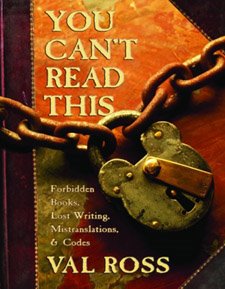
I found quite an interesting book on the history of books, writing, reading and a history of ancient banned books called, "You Can't Read This" by Val Ross.

Many ancient people believed the idea that writing contains power, and that reading unlocks that power. Do you think modern people believe this? I think of the conservative Christians who see danger in Harry Potter books, or countries who keep history from their people, or schools reluctant to allow children to live out scenarios through controversial books.

An excerpt from, "You Can't Read This."
"This book you are looking at right now is a history of reading. But it is also about people who have been denied the power of reading. It's about lost writing, forbidden books, mistranslations, codes, and vanished libraries. It's about censors, vandals, and spies. It's about people who write in secret. And it's about people who devote their hearts and brains to learning what has been written."

Thursday, May 25, 2006

Fahrenheit 451 Searchers and Lurkers

OK. I have seen all of you out there looking for anything you can find on Fahrenheit 451 by Ray Bradbury. Curiosity? Essay due? Whatever the reason, I have placed additional links to good sites for information just for you. Why? I searched "Fahrenheit 451" "why banned" yesterday and found a ton of links that have dropped those very keywords into metatags to bring you to their sites which are selling things, getting you to sign up for things, etc. enticing you in with your request.

Check the links to the right under "Fahrenheit 451 Links" for lots of study guides, teacher resources, a site with the full text of the first chapter, and much more.


As for Fahrenheit 451 being banned, I cannot find an example of a full banning. It was butchered by publishers and some schools had teachers black out the swear words.

In 100 Banned Books: Censorship Histories of World Literature, Nicholas Karolides, Margaret Bald, and Sawn B. Sova explain that author Ray Bradbury learned that Ballentine books, his publisher had been censoring and removing sections from his Fahrenheit 451 for years without his permission. 75 passages were "edited" in order to eliminate words like "damn," "hell," and "abortion."

Can you say, "Irony?"

Tuesday, May 23, 2006

"Gulp Fiction" Has Arrived

"Gulp fiction" or "street lit" has arrived at the Pelham Public Library. A Toronto Star article by Francine Kopun from March 4, 2006 describes a genre of fiction that is appealing to young people. According to Kopun, "The covers are lurid, the language obscene. The plots pop with pimps, prostitutes, guns, drugs and sex, gangs and ghettos."

Apparently it is fiction's fastest-growing genre, popular with teens and women. They have been attacked as glorifying street life and been lauded as cautionary tales by different people. Some people believe they are dragging down the quality of writing while others believe they give a voice to authors who would not have otherwise been heard. What do you think?

With titles such as "Bad Girlz" and "Crack Head," I'm surprised that so far we haven't taken any flack. I haven't read anything in this genre but I am wondering if they could be much different than other "raw" novels in our collection.

Monday, May 22, 2006

Hellraiser, Rabble-rouser, and Defender of the Free Word


Librarian Trina Magi has been described as a hellraiser, rabble-rouser, and defender of the free word.

It's an interesting way to describe a librarian. According to Library Journal.com Magi, a University of Vermont librarian worried that section 215 of the USA PATRIOT ACT could have a negative effect on her students.

“If you have to start wondering what your reading list might look like to an FBI agent, you might start to censor yourself...and the moment you begin thinking that, you are no longer free to be an informed citizen.”

Magi took her concern to Vermont Library Association, which became the first state library association to oppose the Patriot Act officially.

Although we are living in Canada, we have been impacted, at least at our library by the Patriot Act. When setting up a new circulation system last year, we were reluctant to use the setup encouraged by the company, since they wanted all of our information stored on computers in Texas. Canadian citizens would then be subject to the Patriot Act when it came to keeping their borrowing habits private. Another impact on borrowers with the new system is that they/we/or anyone else is unable to look back on books which have been borrowed. The company designed a product that would only hold the name of the current borrower and the borrower prior. Although I can't say for sure why it has been designed that way, my guess is that US libraries prefer not to have information on their patrons' borrowing habits.

Friday, May 19, 2006

Interactive Puzzle - Banned Books

Test your skills/memory/knowledge as you Match the Description with the Banned Book.

And Now for Something Completely Different


An attempted ban and/or attempt to edit "Kaffir Boy has been averted in a Manteca, California high school. The committee comprising 13 parents, administrators and teachers agreed that "Kaffir Boy" is a relevant, authoritative book that promotes the educational goals of the school district. The book which had been used by a senior English class was under review due to its use of the words "penis" and "anus" to describe a scene in which a group of young boys are about to prostitute themselves to a group of men for food. The edited version removed two paragraphs from this scene.

"Kaffir Boy" is an autobiographical coming-of-age account by Mark Mathabane, which describes how he grew up in one of South Africa's toughest ghettoes.

Three years ago, the school board and district administration took steps to remove the book from Manteca Unified schools. There had been some confusion about whether or not the book had been banned at that point and three concerned parents raised the issue once again.

Should a book be removed because of the inclusion of language some students and/or parents might offensive? How do you feel about the use of the edited version being used as a substitute for the author's original work?

Thursday, May 18, 2006

Muslim Groups Support Da Vinci Code Ban

In a number of countries, Muslim groups and clerics are calling for a ban on the Da Vinci Code movie.

In India, Maulana Mansoor Ali Khan, a representative of an organization of Islam clerics, stated,
"We cannot tolerate any insult to Jesus Christ. In the Holy Koran it is written clearly that Jesus is one of our prophets. The film Da Vinci Code says Jesus was a married man. That is blasphemous."


Christian and Muslim leaders have found common ground.

One question that occurs to me is why the film seems to be raising so much more controvery than the book.

Tuesday, May 16, 2006

Da Vinci Code Critics


Following many months of being on the best-seller list, Dan Brown's Da Vinci Code continues to raise the wrath of some people -- many Christians who are angry at his depiction of Christ and the Church. The upcoming release of the film has heightened the controversy. One article lists a number of countries that are talking about banning the film. The Catholic Church has asked its members not to read the book.

It would do well to remember that the book is a work of fiction. According to Brown,
While the book's characters and their actions are obviously not real, the artwork, architecture, documents, and secret rituals depicted in this novel all exist (for example, Leonardo Da Vinci's paintings, the Gnostic Gospels, Hieros Gamos, etc.).
Brown has used just enough fact to muddy the waters for the average person when it comes to knowing fact from fiction in the area of religion.

However, I cannot believe most people will accept his interpretation at face value. If they did, there would not be a controversy. Dan Brown has opened the door for the free discussion of ideas. If we accept everything in the Christian faith at face value, we are not giving ourselves room to grow. Questions like whether Jesus was married or not will always be raised. Is there anything wrong with raising the questions? I once thought God would strike me dead if I thought he didn't exist. Well, once I wondered if he didn't exist and I'm still here to tell the tale.

Can we be faithful and rational at the same time. I think so.

Monday, May 15, 2006

Teen Irony


S. E. Hinton, author of "The Outsiders," a book that has faced many challenges over the years, began writing this book when she was 15 years old. By the time she was 17, S. (Susan) E. (Eloise) Hinton had her book published. She was in high school when she wrote about her experiences growing up in a high school that had rival gangs. Hinton was tired of reading young adult books that had no connection with real life as she experienced it. She wrote about the real emotions and concerns of a teenager. Because of its realism and the "macho" aspects of "The Outsiders," the publishers suggested that she should hide her identity as a woman.

Today, her books are somewhat dated in some aspects but the raw emotional aspects of them are true to the young adult experience and they remain important works.

"The Outsiders" and "That was Then, This is Now" were two favourite books of mine when I was young. However they were far outside of my experience in a small town in Canada. They likely have much more meaning for teens today who experience gang wars in areas like Toronto. The irony is that there are people who believe this book, written by a teenager, should not be read by teenagers.

Her other books for young adults include:
That Was Then, This Is Now
Rumble Fish
Tex
Taming the Star Runner

Friday, May 12, 2006

Crimes of the Centuries

There are worse crimes than burning books. One of them is not reading them.
--Joseph Brodsky

Why is it that most challenges to literature are put forward by people who haven't read the works in their entirety?

Thursday, May 11, 2006

Revenge of the Nerds


In a recent Toronto Star article, there was a story about Citizen Lab,three University of Toronto self-proclaimed computer hackers who are working on a anti-censorship software program designed to outwit the sophisticated censorship firewalls used by China and other countries to keep their citizens from having assess to information. Their product which is called Psiphon is being launched at the end of May. The hackers have been described as David taking on the giant Goliath. It will be interesting to see how effective their product will be in tearing down artificial barriers to information.

Wednesday, May 10, 2006

What is Your Censorship IQ?

I have added a few more links that might be of interest, although they are from the United States.As If: Authors Support Intellectual Freedom champions those who stand against censorship, especially of books for and about teens. Kids Speak Out for Free Speech addresses issues of free speech from a kid's point of view. There is an interesting Quiz to find your Censorship IQ. My score wasn't great with 7/12 but I'll blame that on my lack of knowledge of US law.

Thursday, May 04, 2006

Free the Comics!

Comic books that is....

Thanks to Canuck Librarian's Web Site, I found out that Saturday is Free Comic Book Day. Since a lot of comics have a bad rap, I thought it appropriate to include it on this site. If you type your postal code into the comic book store locator, you will find the participating stores near you.

There is an interesting history of the challenges to laws in the US that prohibited comics from being published on the First Amendment Center Web Page. Laws were on the books in various states that are similar to the New York Penal Law below:

'1. A person * * * who,

'2. Prints, utters, publishes, sells, lends, gives away, distributes or shows, or has in his possession with intent to sell, lend, give away, distribute or show, or otherwise offers for sale, loan, gift or distribution, any book, pamphlet, magazine, newspaper or other printed paper devoted to the publication, and principally made up of criminal news, police reports, or accounts of criminal deeds, or pictures, or stories of deeds of bloodshed, lust or crime;

'Is guilty of a misdemeanor, * * *.'


Banning Extravagance


Accoring to "China View", China's publication authority has banned the sale of books printed on gold foils.

Books printed on golden and silver foils is a relatively new phenomena. The most common "golden book" is a collection of poems by Mao Zedong, the late Chinese leader. THe publication authority believes these types of books are adding to extravagance within the culture and has had an adverse social impact.

As of May 2, Xinhua Bookstore, a major state-owned chain store, has removed "golden books" from their outlets in Beijing.

This is the first time I have seen a book banning based on its substance, rather than content.

Tuesday, May 02, 2006

The Merits of Martyrdom?

According to United Press International, there are books inciting Saudi youth to enroll in holy war being openly sold in bookshops. Youth are encouraged through these books to earn honour and fight "infidels" by becoming suicide bombers. Some of the books include "how to" instructions.

Education and Information Ministry official Youssef Abdel Rahman as saying such books fall under the label of publications banned in Saudi Arabia and that punitive measures will be enforced against the bookstores.

While similar to other publications in giving the instructions to build a bomb, I wonder how dangerous the instructions alongside the indocrination might be.

What do you think?

Monday, May 01, 2006

A Little Off

This is a little off topic today. I have added a small list of other librarians' blogs to the sidebar for your entertainment and information. I little read through some of them and the stereotypical idea of "librarian" is shot to pieces. Who knew librarians could be so wild?

Friday, April 28, 2006

Even More on Deborah Ellis

The Pelham Public Library is thrilled to announce that Deborah Ellis, author of "Three Wishes: Palestinian and Israeli Children Speak," will be appearing at the Fonthill Branch on Tuesday, May 30 at 7:00. She will be addressing the controversy over her book. All ages are welcome. Adults: $5.00. Students/seniors: $3.00. (905) 892-6443. Visit The Pelham Public Library Web Site for directions to the Fonthill Branch.

In a statement, Three Wishes author Deborah Ellis said, “I have done many school talks around my books about children in war. Kids can handle the truth about what is being done to other children. It’s adults who get squeamish. They say, ’We must protect our children from such things,’ when really they are protecting themselves from having to answer the question: ’What are you doing to make the world better?’”

Wednesday, April 26, 2006

More on "Three Wishes" by Deborah Ellis


In Canada, we have seen pressure from the Canadian Jewish Congress to limit children's access to Three Wishes: Palestinian and Israeli Children Speak by Deborah Ellis. Her book has been restricted by the Toronto and York school boards which pulled the book from their reading programs. The Ontario Library Association chose this book for its Silver Birch reading program which encourages children in Grades 4 to 6 to read independently.

A comment was made to me that Bradbury had it right when he saw that the threat to books and information would come not from the top, from some sort of Big Brother government but from below from special interest groups. That is the gist of Fahrenheit 451. Captain Beatty says,

"It didn't come from the Government down. There was no dictum, no declaration, no censorship, to start with, no! Technology, mass exploitation, and minority pressure carried the trick, thank God. Today, thanks to them, you can stay happy all the time, you are allowed to read comics, the good old confessions, or trade journals."

So whether it is the Canadian Jewish Congress or another minority group with issues around what is being published, our society needs to be wary of the balance between political correctness and allowing minority groups to control what is available to the whole of society.

Wednesday, April 19, 2006

Burn It!


There is more than one way to burn a book.
And the world is full of people running about with lit matches.


Ray Bradbury responds to those people who would censor his book on censorship. Read the whole article.

Long ago in a faraway kingdom, when I was a student teacher, I was given a sanitized version of Tom Sawyer to use with a Junior grade. There were short excerpts of the book, which, in the end, had no resemblance to the novel that I had read and loved as a child. It was porridge, mush, baby food with no substance. It irked me that I was forced to use it but being the student, I followed along. The word "nigger" had been wiped from its pages, along with any of the issues that might be the subject of a good discussion.

I would love to hear from anyone who has also encountered this kind of censorship and what your response to it has been.

Tuesday, April 18, 2006

More On "Bridge to Terabithia"


I found a web site that gives a little more information about why Bridge to Terabithia was originally banned. According to author, Katherine Paterson, "Initially, it was challenged because it deals with a boy who lives in rural Virginia, and he uses the word 'Lord' a lot, and it's not in prayer. Then there are more complicated reasons. The children build an imaginary kingdom, and there was the feeling that I was promoting the religion of secular humanism, and then New Age religion."

Of note is the irony of Paterson's parents being Christian missionaries and Paterson's marriage to a Presbyterian minister.

Read more about Katherine Paterson at her web site.

Safely Back from China

I have returned from China without getting arrested once for my opinions.

I have learned that there are more books on the "classic" banned/challenged list than I thought might be available, at least in English. I am not sure about Chinese but I did manage to buy a copy of a Harry Potter book.

I also found out that the great Firewall of China can't possibly keep the Chinese from hearing what is happening in the rest of the world. Neither can one government silence its people. Some people in China who are on the Internet have a non-Chinese account set up on a server somewhere outside of China.

TV was not for entertainment, rather for education. In China, the BBC (British Broadcasting Corporation) was the major news source, along with an Asia CNN version. HBO was available but the movies were repeated quite often with content that was likely picked for a Chinese audience. The movies were quite tame in comparison to Canada. Once and a while during a newscast, there would be a few minutes of snow. I was told that the content was likely being censored by the government.

American news sites were not available on the Internet but I guess Canadian ideas are not considered dangerous since the CBC was always available.

As more and more foreign workers bring their skills to China, I see the possibility for more and more freedom of speech in China, since many of the workers are technologically advanced.

Thursday, April 06, 2006

Boing Boing

While in China, I have been reading the English language daily newspaper. There was a great article on the Blooker Prize, created to recognize blogs that have award-winning content. The Blooker Prize was awarded to Julie Powell who now has published Julie and Julia, her blog describing cooking all of Julia Child's recipes within 365 days.

I thought it would be interesting to read the whole story which was found at boingboing.com but this blog site as well as Blogger is not available in China. Shame that I could read about it but NOT read the actual web log.

Lulu.com will publish your web log as a book. This is publishing at the grassroots level, giving a voice to anyone who can keep a web log. Cory Doctorow, author of Down and Out in the Magic Kingdom, among other publications that are available under a Creative Commons license has his hand in this venture.

Wednesday, March 29, 2006

More from China

I was in the Carrefour, the Walmart of China today and had a look at the books. The titles are usually in English and Chinese. I was surprised to find a few books that have been banned or challenged in other places. They included: Lolita, Bible stories, Frankenstein, Huckleberry Finn, Tom Sawyer. Actually I was mostly surprised that Lolita and the Bible stories were available. The others have either become classics or are outside of the Chinese experience enough that they do not cause concern. The criteria for bring in literature or electronic data was that it could not do harm to the society by causing instability.

China places harmony above many other societal values. Can that be such a bad thing? How important is harmony in Canadian society?

Do you think there are works of literature that have either caused or could cause instability in Canadian society, in Chinese society, in any society?

Saturday, March 25, 2006

Parental Controls

On the plane, I met a gentleman from the U.S. We talked a little about what we did for a living. He seemed to think that librarians are very left wing. I have always thought about librarians as being quite conservative. Perhaps the perception has changed.

We talked about the challenge toThree Wishes in Toronto and York School boards. He said he believed strongly in the right for parents to control what their kids read. My problem with that is that by removing from the Silver Birch list or by requiring a note from home to read it, school boards are allowing a minority of parents to control not only what their kids have access to, but what other kids have access to.

There must be a better way to balance parental rights with the right to have books that librarians have chosen for their excellence accessible to all students. Should a minority be able to influence the choices this way?

Friday, March 24, 2006

Posting from China

I find it interesting that I am able to post from China. However, I am not able to actually get onto the web log from here. The Forbidden Library web site is also apparently off limits.

I found it interesting to find Beijing Doll in a bookstore in English yesterday. I read on the cover last year that it had been banned throughout China. It is a coming of age book much like Catcher in the Rye. So, I was shopping through the very Western shops near the hotel when I came across this book which actually reads on the back cover that it was banned in China. Wait a minute, I am in China!

Maybe the Chinese version is not available?

Thursday, March 16, 2006

Top Ten List for 2005

The American Library Association has released its top ten list for challenged books for 2005.

According to the ALA, "Robie H. Harris, one of the most frequently challenged authors of the past decade, has two titles on the list of most frequently challenged books of 2005, the American Library Association’s Office for Intellectual Freedom announced March 7: It’s Perfectly Normal: Changing Bodies, Growing Up, Sex, and Sexual Health, and It’s So Amazing! A Book About Eggs, Sperm, Birth, Babies, and Families. In the past year, It’s Perfectly Normal was attacked for containing references to homosexuality, nudity, sex education, religious viewpoint, abortion, and being unsuited for young age groups, while It’s So Amazing received complaints about its discussion of sex education and sexual content."

Last year, in the US, 405 formal, written complaints were filed with a library or school requesting that materials be removed.

The top 10 most frequently challenged books of 2005 are:

* It’s Perfectly Normal by Robie H. Harris
* Forever by Judy Blume
* The Catcher in the Rye by J. D. Salinger
* The Chocolate War by Robert Cormier
* Whale Talk by Chris Crutcher
* Detour for Emmy by Marilyn Reynolds
* What My Mother Doesn’t Know by Sonya Sones
* Captain Underpants series by Dav Pilkey
* Crazy Lady! by Jane Leslie Conly
* It’s So Amazing! by Robie H. Harris

I find it interesting that Judy Blume and J. D. Salinger continue to raise the hackles of parents.

Does anything about the list surprise you?

Tuesday, March 14, 2006

What's The Difference?

At the Pelham Public Library, where I work, the question often comes up about the difference between a "banned" and "challenged" book.

According to the American Library Assocation, "A challenge is an attempt to remove or restrict materials, based upon the objections of a person or group. A banning is the removal of those materials. Challenges do not simply involve a person expressing a point of view; rather, they are an attempt to remove material from the curriculum or library, thereby restricting the access of others."

In Canada, I believe we face many challenges, usually within the context of educational materials. Outright banning of materials is rare but I have heard of adult materials being stopped at the border.

Most pubic libraries in Canada will not restrict materials based on the objections of one person or a group. It should also be noted that libraries provide an InterLibrary Loan system, so even if they choose not to purchase a particular book for whatever reason, patrons can order the book from another library.

What book challenges have you heard about in your area? Have you heard of any outright ban?

Friday, March 10, 2006

100 Most Challenged List (ALA)

Although this is an American list, likely many of you have read some of these books. I have highlighted the ones I have read and invite you to copy and paste the list into a comment and do the same. Can you identify the Canadian publications? Leave a comment with your guess. 23 down, 77 to go.

1. Scary Stories (Series) by Alvin Schwartz
2. Daddy’s Roommate by Michael Willhoite
3. I Know Why the Caged Bird Sings by Maya Angelou
4. The Chocolate War by Robert Cormier
5. The Adventures of Huckleberry Finn by Mark Twain
6. Of Mice and Men by John Steinbeck
7. Harry Potter (Series) by J.K. Rowling
8. Forever by Judy Blume
9. Bridge to Terabithia by Katherine Paterson
10. Alice (Series) by Phyllis Reynolds Naylor
11. Heather Has Two Mommies by Leslea Newman
12. My Brother Sam is Dead by James Lincoln Collier and Christopher Collier
13. The Catcher in the Rye by J.D. Salinger
14. The Giver by Lois Lowry
15. It’s Perfectly Normal by Robie Harris
16. Goosebumps (Series) by R.L. Stine (I’ve read some of these, not all)
17. A Day No Pigs Would Die by Robert Newton Peck
18. The Color Purple by Alice Walker
19. Sex by Madonna
20. Earth’s Children (Series) by Jean M. Auel (on my "to read" list)
21. The Great Gilly Hopkins by Katherine Paterson
22. A Wrinkle in Time by Madeleine L’Engle (one of my most favourite books of all time!)
23. Go Ask Alice by Anonymous
24. Fallen Angels by Walter Dean Myers
25. In the Night Kitchen by Maurice Sendak
26. The Stupids (Series) by Harry Allard
27. The Witches by Roald Dahl
28. The New Joy of Gay Sex by Charles Silverstein
29. Anastasia Krupnik (Series) by Lois Lowry
30. The Goats by Brock Cole
31. Kaffir Boy by Mark Mathabane
32. Blubber by Judy Blume
33. Killing Mr. Griffin by Lois Duncan
34. Halloween ABC by Eve Merriam
35. We All Fall Down by Robert Cormier
36. Final Exit by Derek Humphry
37. The Handmaid’s Tale by Margaret Atwood
38. Julie of the Wolves by Jean Craighead George
39. The Bluest Eye by Toni Morrison
40. What’s Happening to my Body? Book for Girls: A Growing-Up Guide for Parents & Daughters by Lynda Madaras
41. To Kill a Mockingbird by Harper Lee
42. Beloved by Toni Morrison
43. The Outsiders by S.E. Hinton
44. The Pigman by Paul Zindel
45. Bumps in the Night by Harry Allard
46. Deenie by Judy Blume
47. Flowers for Algernon by Daniel Keyes
48. Annie on my Mind by Nancy Garden
49. The Boy Who Lost His Face by Louis Sachar
50. Cross Your Fingers, Spit in Your Hat by Alvin Schwartz
51. A Light in the Attic by Shel Silverstein (a book of poetry)
52. Brave New World by Aldous Huxley
53. Sleeping Beauty Trilogy by A.N. Roquelaure (Anne Rice)
54. Asking About Sex and Growing Up by Joanna Cole
55. Cujo by Stephen King
56. James and the Giant Peach by Roald Dahl
57. The Anarchist Cookbook by William Powell
58. Boys and Sex by Wardell Pomeroy
59. Ordinary People by Judith Guest
60. American Psycho by Bret Easton Ellis
61. What’s Happening to my Body? Book for Boys: A Growing-Up Guide for Parents & Sons by Lynda Madaras
62. Are You There, God? It’s Me, Margaret by Judy Blume
63. Crazy Lady by Jane Conly
64. Athletic Shorts by Chris Crutcher
65. Fade by Robert Cormier
66. Guess What? by Mem Fox
67. The House of Spirits by Isabel Allende
68. The Face on the Milk Carton by Caroline Cooney
69. Slaughterhouse-Five by Kurt Vonnegut
70. Lord of the Flies by William Golding
71. Native Son by Richard Wright
72. Women on Top: How Real Life Has Changed Women’s Fantasies by Nancy Friday
73. Curses, Hexes and Spells by Daniel Cohen
74. Jack by A.M. Homes
75. Bless Me, Ultima by Rudolfo A. Anaya
76. Where Did I Come From? by Peter Mayle
77. Carrie by Stephen King
78. Tiger Eyes by Judy Blume
79. On My Honor by Marion Dane Bauer
80. Arizona Kid by Ron Koertge
81. Family Secrets by Norma Klein
82. Mommy Laid An Egg by Babette Cole
83. The Dead Zone by Stephen King
84. The Adventures of Tom Sawyer by Mark Twain
85. Song of Solomon by Toni Morrison
86. Always Running by Luis Rodriguez
87. Private Parts by Howard Stern
88. Where’s Waldo? by Martin Hanford
89. Summer of My German Soldier by Bette Greene
90. Little Black Sambo by Helen Bannerman
91. Pillars of the Earth by Ken Follett
92. Running Loose by Chris Crutcher
93. Sex Education by Jenny Davis
94. The Drowning of Stephen Jones by Bette Greene
95. Girls and Sex by Wardell Pomeroy
96. How to Eat Fried Worms by Thomas Rockwell
97. View from the Cherry Tree by Willo Davis Roberts
98. The Headless Cupid by Zilpha Keatley Snyder
99. The Terrorist by Caroline Cooney
100. Jump Ship to Freedom by James Lincoln Collier and Christopher Collier

The Book To Save

Hello, As this is my first time blogging I thought I would answer one of the Moderator's questions. Which book would I memorize? I would memorize Something Good by Robert Munsch. Yes, I know that this is a children's story. However, it is a story that speaks to young children, older teens and adults alike. As a story teller, I love telling this story and watching faces recognize themselves, a sister or brother, a parent, or a child in the characters. The characters are everyday people dealing with their daily life and offering humour to the situation. As a storyteller, there are great opportunities to use voice and action to develop distinct personalities for each character. I would memorize this book because of the joy it has brought to my life and others. No it is not a banned book, but did you know that it took Robert Munsch years to publish Good Families Don't -- a book about a fart.

Wednesday, March 08, 2006

Bridge to Terabithia


I reread Bridge to Terabithia again last week. It is one of my favourite children's books. In fact, I believe everyone, whether child, teen, or adult should give it a read. It is the winner of a Newberry Award.

Leslie and Jess strike up a strong girl/boy relationship. It is not romantic in any sense of the word. Together they create an imaginary magic kingdom where they reign. Real strength of character is needed when tragedy splits apart their world.

I thought about some of the reasons it might have been challenged.

1. Jess imagines one of his teachers in a pink corsette.
2. Leslie's parents are atypical. They allow her to call them by their first names. They live an untraditional lifestyle for the time in which the book was written.
3. The same can be said of the music teacher, who wears jeans and plays the guitar.
4. Jess' parents no longer attend church because they do not like the minister. They go to church only on special Sundays like Easter.
5. There are a few swear words and "Lord" is used irreverantly for the time.
6. Terabithia, Jess and Leslie decide, is a sacred place but also haunted -- not by something bad but by something good. They pray to the spirits of the grove.

I think any one of these reasons might have been used in 1977 to challenge this book.

According to SparkNotes, "Bridge to Terabithia is actually part of an ongoing censorship battle in many areas around the country. Critics cite the use of profanity in the book, but in fact the profanity is mild and infrequent: in dialogue some of the characters might use the words "damn" and "hell," but it is certainly not particularly pervasive. Clearly, the critics are angered for other reasons that they are more reluctant to aim, and general surmise attributes their complaints to the treatment of religion in the book. Leslie's family is liberal politically and do not attend church, whereas Jess's family only attends church at Easter. Religion is certainly not portrayed in a negative light in the book, but true to Paterson's upbringing, faith is shown to be fulfilling when divested of the strict, unforgiving dogma of the organized church. The ending, which reaffirms that God does not send good people to hell, essentially, is probably the reason that right-wing conservatives have come down on the book so strongly."